
Discover Easter Craiglockhart Hill
Easter Craiglockhart Hill is unique in this area of Edinburgh by having a wide range of habitats in an accessible publicly managed natural green space. These habitats include open water, marsh, woodland and grassland.
Visit the Hill!

The best way to discover Easter Craiglockhart Hill and the whole Local Nature Reserve is to get out and about on the ground. There are many interesting things to see and do on the hill, and you can visit anytime, any day.
You are welcome to wander anywhere you like within the LNR, but we ask you to stay on the existing footpaths and trails in the wooded areas so that the wild creatures and plants don’t get trampled. Also, the reserve area is bordered on all sides by private property, so please be careful not to annoy our neighbours.
Dogs can be walked anywhere in the area, but please be respectful of others, pick up their poo and take it away with you, and keep your dog on a lead when walking round the pond so as not to frighten the many birds and other wildlife.
Activities

There are many fun and educational activities that ‘children’ of all ages (8 to 80 and beyond!) can enjoy around the hill, woods and pond. Whether on your own, as a family, or in organised groups, you can use the woods to find out about animals, insects and invertebrates, as well as the trees, plants and fungi.
Our Activity Guides and Worksheets can help you and your young ones to explore and learn while looking after the biodiversity and staying safe.
Habitats

Marsh and Pond
In the marsh area by the pond you can find flowers like northern marsh and common spotted orchid as well as frogs and toads. The pond was originally created in 1887. It is home to many birds such as nesting swans, coot and moorhen in summer and tufted duck in winter.

Woodland
These woodlands were planted over 200 years ago and today you can see a mix of sycamore, elm, beech and ash. You can also find sanicle, common dog violet the English bluebell. Along the edges of the wood grow horse chestnut and sycamore trees. Near Craighouse you will see oak, and a plantation of pine and larch, while near the pond there are silver birch and yew – quite a variety! Look and listen for birds like great tits, wren and blackbirds. In the evening you may be lucky enough to hear owls or see some of the bat population.
Meadow
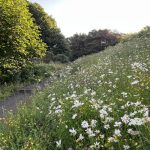
We are lucky enough to have several areas of meadow on Easter Craiglockhart Hill. These provide a rich and changing variety of environments and food for a wide range of insects, birds and other animals. In spring and early summer the abundant flowers provide nectar for bees and butterflies, and then in late summer and autumn the many seed-heads are foraged by birds and small mammals. The meadow is actively managed to encourage biodiversity and a healthy habitat.

Grassland
The grassland habitat at the top of the hill is primarily open meadow and turf, mixed with gorse and scrub. These calcareous and acidic, species-rich grasslands support diverse wildflowers, insects, and provide hunting grounds for birds of prey such as kestrels and buzzards.
The ‘Happy Valley’ Area
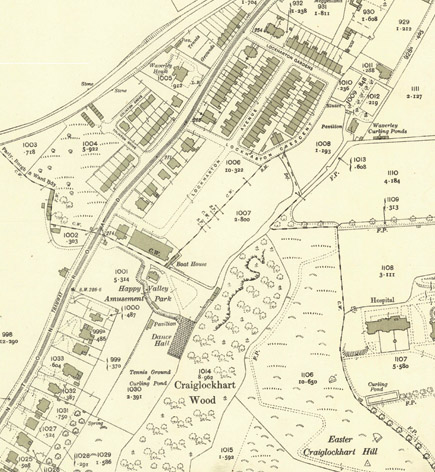
Our particular part of Craiglockhart has been known for over 150 years as a place of recreation and recuperation. The creation of the pond allowed skating and curling in the winter, and boating in the summer. Then, with the addition over the years of a tearoom, a dance hall and some tennis courts, it became known as Happy Valley Amusement Park. It has a place in history, with many interesting stories to tell.
Local Geology

Old red sandstone formed 400 million years ago under a shallow sea, then about 325 million years ago volcanoes erupted. When they cooled they formed the hard igneous rock which is Easter Craiglockhart Hill. You can see this rock as lava outcrops.
The softer green coloured rock on the edge of the hill is volcanic tuff which is volcanic ash, expelled when the volcano erupted. Later, earthquakes caused the rock to split leaving steep sided cliffs. Then 17,000 years ago a huge sheet of ice covered the area. When it melted, the valleys were cut leaving the hills you see today.